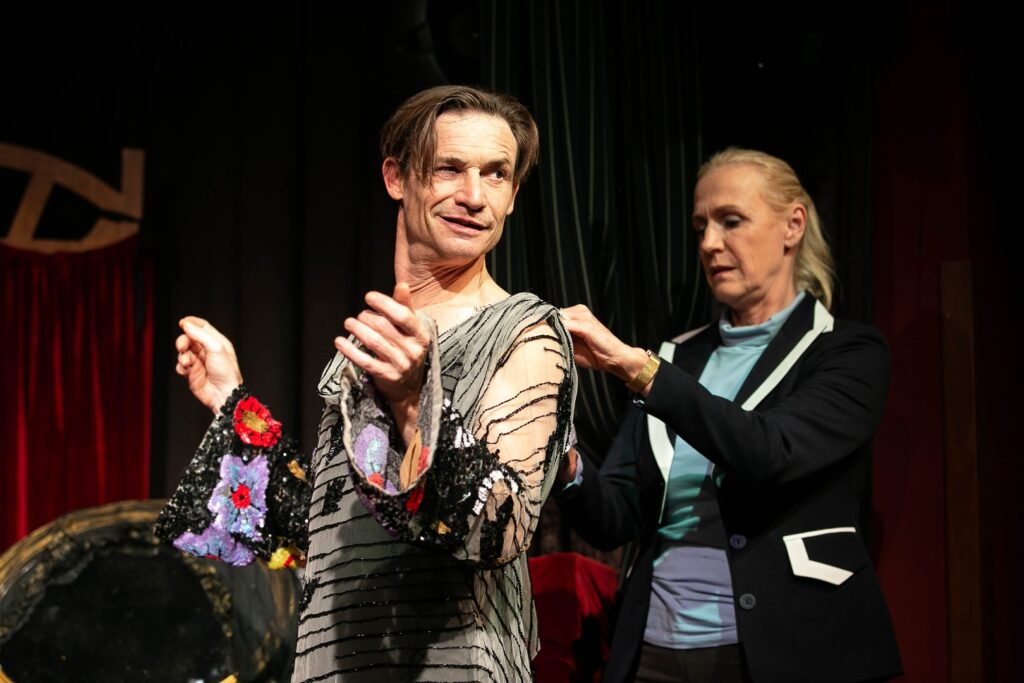
Almost everyone knows everything about ZsaZsa Gábor (original name Sári Gábor). We know that she had nine husbands, that she was beautiful and rich, that she loved horses and diamonds. And we know that she lived to be almost a hundred years old. But do we really know who she really was? What is the secret of her success and popularity that lasted beyond her death? Was she an actress? Was she a diva? Was she a celebrity? Was she happy? In the Spinoza Theatre performance, ZsaZsa herself seeks the answer, with honest confrontation, her unique humor and inimitable style.
In the role of Zsa Zsa: Dóra Létay
Light and sound design: Kálmán Vizhányó Set design: Gábor Czeizel Dramaturge: Lili Fabacsovics Written by: Ann Silberberg and Dóra Létay Directed by: Gábor Czeizel Producer: Anna Sándor
Tony Curtis – The Prince of Hollywood
Tony Curtis was born 100 years ago in New York City to an Orthodox Jewish family from Mátészalka, under the name Schwartz Bernard. He didn’t speak a word of English until he was six, and when he did, it was with a Mátészalka accent. He didn’t go to school much. Strongly confident in himself, he nevertheless went to Hollywood at the age of 25. By the age of 50, he was a world star, millions of dollars were pouring in, he had made over a hundred films, a thousand women and three marriages. He became a drug addict and an alcoholic, his life was in ruins. How he got out of all this, is the story of this two-person play set in the New York psychiatrist’s office.
Cast: Tony Curtis – Tamás Mészáros Psychiatrist – Klára Spilák
Set and Costume Design: Gábor Czeizel Expert: Róbert Urbán Featuring a recording by: Krisztina Fejes, pianist Dramaturg: Lili Fabacsovics Written by: Anna Sándor Directed by: Gábor Czeizel
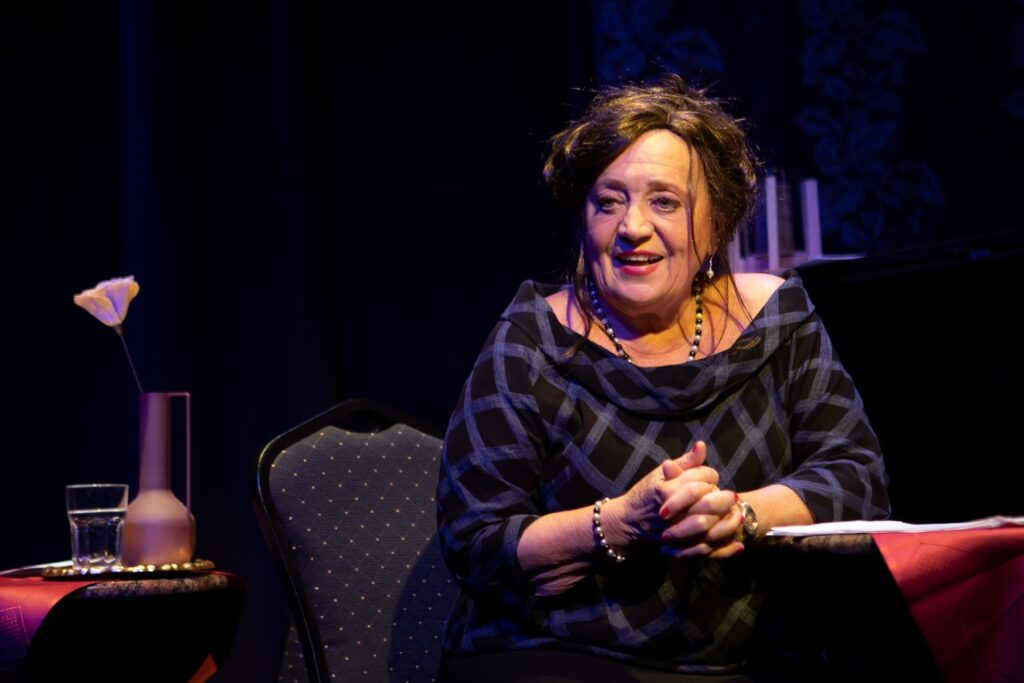
Albina: The Woman Behind the Nobel Prize
Of the eighty-five people interviewed, only one person knew who the first wife of Nobel Prize-winning writer Imre Kertész was. Albina Vas, born in Subotica, with whom Kertész lived for 42 years. During this time, she supported her husband, believed in his talent and stood behind Kertész until his most famous work was born. Albina spoke seven foreign languages, earned her living with her red nails as a truck driver and then as a waiter.
Who was this great woman, who was already a widow at the age of 16, experienced the Subotica ghetto, then the Gestapo in Pest, and later the Kistarcsa deportation? Her property and apartment were confiscated three times, but no one could take away her vitality, zest for life and ability to love.
The performance was created with the support of the Foundation for Research on Central and Eastern European History and Society, which maintains the Imre Kertész Institute.
Performer: Eszter CsákányiDramatist: Lili Fabacsovics Written by: Anna Sándor Director: Gábor Czeizel Photo: Évi Fábián
Capa, the world-famous war photographer
Endre Friedmann (1913–1954) was born in Budapest, Robert Capa. The drama that tells the story of his adventures takes place between 1929 and 1954. He is accompanied by his childhood friend, Éva Besnyő, also a famous photographer. We travel with them, and we learn about Robert Capa’s life through their conversations.
The drama brings us closer to the history of photography, the development of modern photography, the mysteries of war reporting, but most of all, Capa’s strange life. We see him in the Spanish Civil War, the Sino-Japanese War, North Africa, the Normandy landings, and finally in the Indochina War that was fatal for him. Throughout his life, he comes into contact with people such as Trotsky, Frida Kahlo, Orwell, Hemingway, President Roosevelt, Ingrid Bergman, Humphrey Bogart, John Steinbeck, Picasso, and even Ben Gurion. We also get a glimpse into his turbulent love affairs.
Cast: Robert Capa: Kristóf Ódor Éva Besnyő: Petra Grisnik
Costume designer: Diána Veréb Dramaturge: Lili Fabacsovics Written by: Ann Silberberg Director: Gábor Czeizel Photos: Eszter Gordon
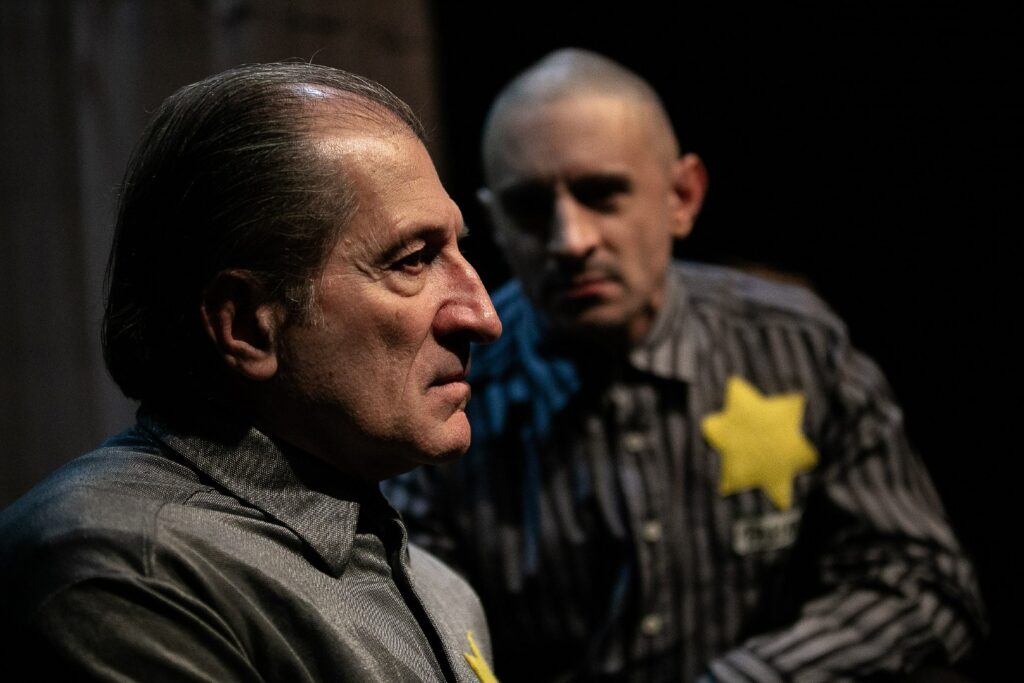
Goldberger, the textile king
During the interwar period, the revival of Hungarian industry owed much to assimilated Jewish industrialists and entrepreneurs such as Manfréd Weiss (engineering), Gedeon Richter (pharmaceuticals), Lipót Aschner (Tungsram), and Leó Goldberger (textiles). Leó Goldberger, the so-called “Textile King,” was a prime example of this economic elite — a personal friend, advisor, and even card-playing partner of Miklós Horthy, who also served as a member of Parliament.
The drama about the life of Leó Goldberger explores the psychological mechanisms of self-deception that prevented these broad-minded, modern-thinking Jewish citizens from recognizing reality in time and escaping. What sustained their blind faith that nothing could happen to them — even when, under the anti-Jewish laws, Goldberger himself was forced out of his own factory? And even then, when his train was already bound for the concentration camp where his life came to an end, that belief still did not abandon him.
Cast and Crew
Leó Goldberger: Antal Cserna The Secretary: Tamás Ivanics
Written by: Ann Silberberg – Anna Sándor Dramaturg: Lili Fabacsovics Set and Costume Design: Gábor Czeizel Sound and Lighting: Kálmán Vizhányó Directed by: András Surányi
Moses and Jesus in Pest
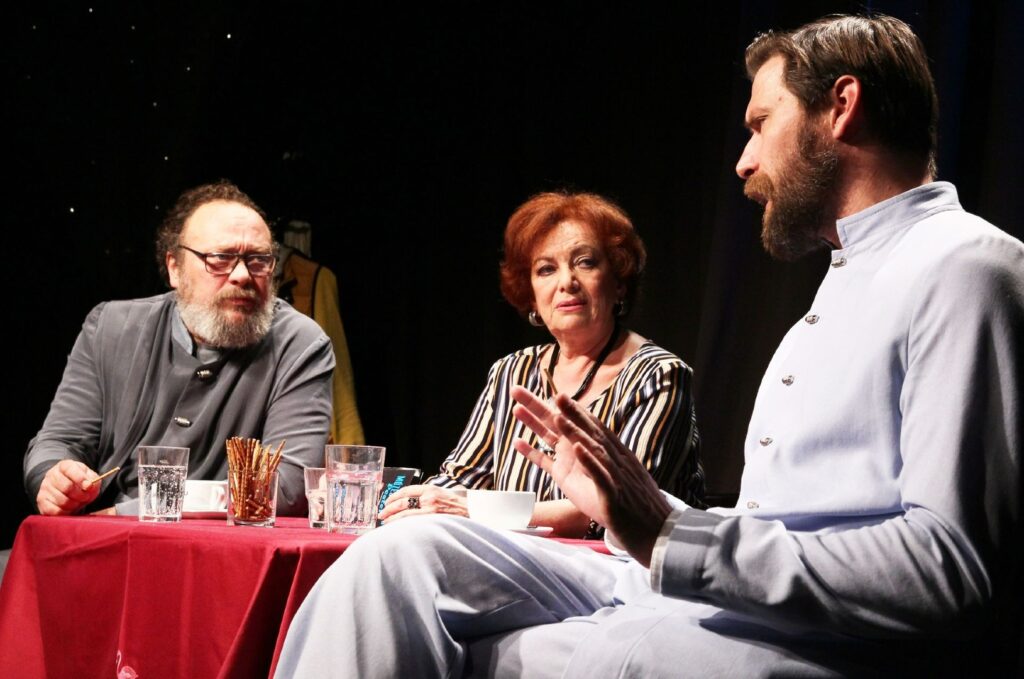
Moses and Jesus meet on Margaret Island. Jesus came to Pest to see what had become of Christianity, and Moses wonders what we had done with the Ten Commandments, whether we were fulfilling the Mosaic laws. In the meantime, the two argue about which of them has given more to humanity. They consider which of them is more popular, which one is more respected by the world today. The decision of the debate would be left to a Pest journalist, who in turn would inform Moses and Jesus about what is happening in today’s Hungary.
Cast: Moses: Zoltán Schneider Jesus: Zalán Makranczi Journalist: Júlia Zsolnai
Costume: Veréb Dia Written by: Ann Silberberg – Anna Sándor Director: Gábor Czeizel Photos: Zsolt Puskel
Herzl
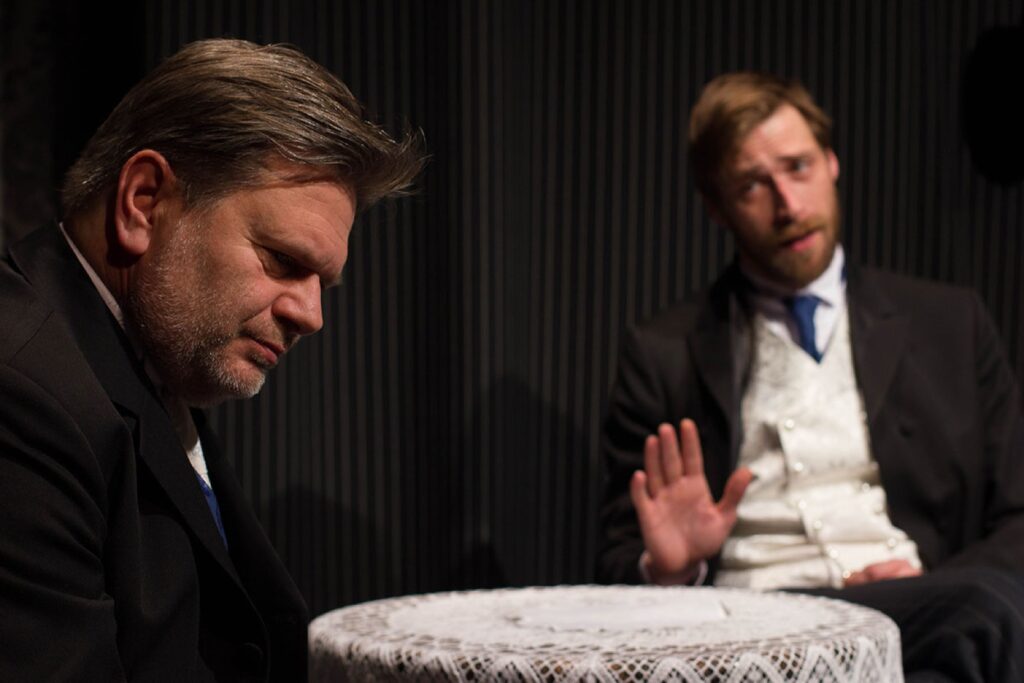
Max Nordau and Tivadar Herzl were born just a few meters from Spinoza. Two Hungarian Jews who played a fundamental role in the creation of Israel. How? What did they do? How did the playwright Herzl reach the world’s leading politicians? Which 10 countries, apart from today’s Israel, were still being considered as the home of the Jews?
Cast: Tivadar Herzl: Zalán Makranczi Max Nordau: József Gyabronka Waiter: László Hajdú
Costume: Dia Veréb Producer: Anna Sándor Written by: Ann Silberberg and András Forgách Directed by: Gábor Czeizel